
Build Powerful Web Applications with Django!
We are a team of talented developers building scalable web apps with Django and Python.

Learn Django in 2025: Your Gateway to Scalable Web Development
Django is one of the most popular frameworks for web development, and it continues to evolve. Whether you're new to web development or want to sharpen your skills, Django offers a structured and efficient way to build secure and maintainable web applications.
-
Fast Development
Django comes with pre-built features that help you build web apps faster without compromising security.
-
Scalable Architecture
From small apps to large-scale systems, Django scales with your needs, making it perfect for every project.
-
Robust Security
Django follows best practices and offers built-in tools to safeguard your web applications.
Master Django with Real-World Experience
Our Django course offers practical, hands-on learning for beginners and professionals alike. Build real-world projects from day one and prepare for careers in web development, backend services, and more.
- Build dynamic web applications using Django's robust features.
- Learn best practices for clean, maintainable code in Python and Django.
- Get expert mentorship and build a portfolio that demonstrates your skills.

No Coding Experience? No Problem!
If you're new to programming, we’ll guide you step-by-step. Our Django course is designed to teach you Python and Django from the basics to building powerful web apps.
- Learn Django and Python with beginner-friendly content
- Master how to set up databases, authentication, and more
- Work with APIs and frontend technologies for a full-stack experience
- Join a community of learners and gain support through collaboration
Course Syllabus Overview
This is a brief overview of the syllabus. For more detailed information on each topic, please download the full syllabus.
Download Full SyllabusModule 1: Introduction to Django
1.1: Introduction to Django
Overview of Django and its popularity.
1.2: Features of Django
Key features that make Django ideal for web apps.
1.3: Django Web Server
Setting up the Django web server for development.
1.4: Django Environment
Set up a virtual environment and understand the structure.
1.5: Hello World App
Build your first Django app.
Module 2: Django Architecture
2.1: Django Architecture
Explore Django's internal architecture and the MTV pattern.
2.2: MVC vs MTV
Compare MVC and MTV patterns.
2.3: Starting a Project
Learn how to start a new Django project.
2.4: Django Apps
Learn how to structure apps in a Django project.
Module 3: Views, URLs, and Templates
3.1: Hyperlink View
Learn how to create views that display hyperlinks.
3.2: URL Mapping
Map views to specific URLs.
3.3: Templates and Inheritance
Use templates and template inheritance.
3.4: Data Flow
Pass data from URLs to views and templates.
Module 4: Django Models and DB Operations
4.1: Creating Models
Learn to create models and link them to database tables.
4.2: Data Access via Django Shell
Use the Django shell for database interactions.
4.3: CRUD Operations
Perform Create, Read, Update, Delete operations in Django.
Module 5: Django Admin Interface
5.1: Admin Panel
Set up Django’s admin panel for model management.
5.2: Customize Admin
Learn how to customize the admin interface.
5.3: Users and Permissions
Add users and assign permissions in Django.
Module 6: Django Forms and Email
6.1: Creating Forms
Build forms for user input and validation.
6.2: Email Functionality
Configure email settings and send emails from Django.
6.3: Template Language
Learn Django’s template language with tags and filters.
Module 7: Sessions and Cookies
7.1: Session vs Cookie
Understand the differences between sessions and cookies.
7.2: Using Sessions and Cookies
Store and retrieve user data with sessions and cookies.
Module 8: Working with Databases
8.1: SQLite and MySQL
Learn how to use SQLite and MySQL in Django.
8.2: Advanced Queries
Master querying and filtering with Django ORM.
Module 9: Django Restful API
9.1: CRUD with Django Rest Framework
Implement CRUD operations with Django Rest Framework.
9.2: Live Project
Build and deploy a live project using Django Rest APIs.
Module 10: Final Project and Deployment
10.1: Functional Website
Build a functional website from start to finish.
10.2: Deployment
Learn to deploy your Django project to production.
Course Conclusion
Review & Q&A
Review key concepts and troubleshoot questions.
Certification
Receive a certificate upon completing the course.
Further Learning
Explore next steps and advanced topics.
Learning Support & Career Services
Enhance your learning with real-time help, regular assessments, and expert career guidance.

Live Doubt-Solving Sessions
Attend live Q&A and mentoring sessions to clarify your doubts in real time.

Assignments & Weekly Tests
Regular assessments to track your progress and reinforce learning.

Interview & Career Preparation
Personalized mock interviews, coding interview practice, and resume-building tips.
💥 Limited-Time Discounts on Tech Courses!
Grab your spot and save big on the skills that matter.
🎓 School Student Deal – 30% OFF
Get 30% off beginner-friendly coding, web, and STEM courses! Start your tech journey today.
Get Offer🏫 College Exclusive – 25% OFF
Advance your tech skills with 25% off specialized software and data courses built for college students.
Claim Deal👥 Group Deal – Save up to 40%
Join with 3+ friends and unlock up to 40% in savings! Study together, succeed together.
Join Now⚡ Flash Sale – 50% OFF (24 Hrs!)
Enjoy a massive 50% off any course for the next 24 hours. Don’t miss out!
Special offerDjango Interview Questions
Learn about key Django concepts and prepare for your interviews with these essential questions.
Conceptual Interview Questions:
1.1: What is Django, and how does it differ from other web frameworks?
1.2: What is the MTV pattern in Django?
1.3: How do you create a Django project and an app?
1.4: What is Django’s ORM, and how does it simplify database interaction?
1.5: How do you run the Django development server?
Programming Questions:
1. Write a Django view that renders a "Hello, World!" message.
2. Create a Django model to represent a blog post with a title and content.
Conceptual Interview Questions:
2.1: What are Django models, and how do they interact with databases?
2.2: How do you define relationships between models in Django (ForeignKey, ManyToManyField, OneToOneField)?
2.3: What is a migrations file in Django, and how do you create and apply it?
2.4: How do you use Django’s ORM to query the database?
2.5: What is the purpose of Django’s `manage.py` file?
Programming Questions:
1. Write a Django model to store product information with fields like name, price, and description.
2. Create a view that queries the database and returns a list of all blog posts.
Conceptual Interview Questions:
3.1: What is a Django view, and how does it differ from a template?
3.2: How do you pass context data from views to templates in Django?
3.3: What is the role of the `render` function in Django?
3.4: How do you handle form submissions in Django?
3.5: What are generic views in Django, and when should you use them?
Programming Questions:
1. Write a Django view to display a list of all blog posts.
2. Create a Django form that allows users to submit comments on a post.
Conceptual Interview Questions:
4.1: How does Django handle URL routing?
4.2: What is the difference between `urls.py` in an app and in the project?
4.3: What is the purpose of `path()` and `re_path()` in Django?
4.4: How do you include URL patterns from an app in the project’s URL configuration?
Programming Questions:
1. Write a Django URL pattern to map a view for displaying user profiles.
2. Create a URL pattern that includes a dynamic URL for individual blog posts (e.g., `/post/
Conceptual Interview Questions:
5.1: What is the purpose of Django forms?
5.2: How do you validate form data in Django?
5.3: What are Django ModelForms, and how are they different from regular forms?
5.4: How do you handle form errors in Django?
Programming Questions:
1. Write a Django form for creating a new blog post with fields for title, content, and author.
2. Implement form validation in Django to ensure that the title field is not empty.
Conceptual Interview Questions:
6.1: How does Django handle user authentication?
6.2: What are the differences between `login()` and `logout()` in Django?
6.3: How do you implement user permissions and authorization in Django?
6.4: What is Django’s User model, and how do you extend it?
Programming Questions:
1. Write a Django view that allows a user to log in and log out.
2. Create a view that restricts access to a page for authenticated users only.
Conceptual Interview Questions:
7.1: How do you write unit tests in Django?
7.2: What is Django's TestClient, and how is it used for testing views?
7.3: How do you mock external services in Django tests?
Programming Questions:
1. Write a Django test to verify that a blog post page returns a 200 OK status.
2. Create a test case to check if a form submission results in a new blog post being created.
Django Project Ideas
A collection of practical and interesting Django projects to enhance your web development skills.
Blogging Platform
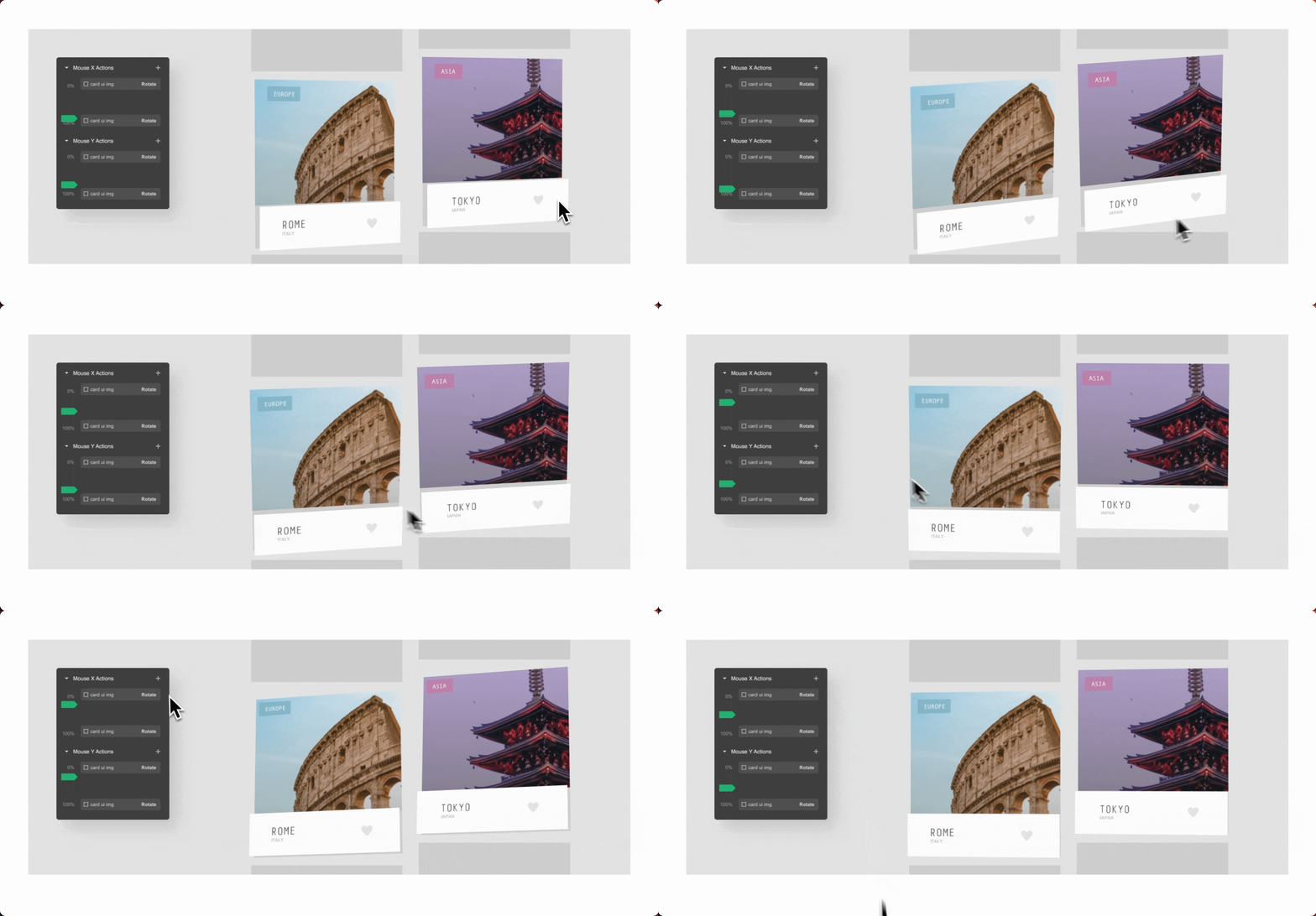
A simple blog website using Django.Build a basic blog platform where users can create, edit, and delete blog posts. Implement user authentication, comment sections, and a simple admin interface.

Task Management System
Organize and track tasks with Django.Create a web application for managing tasks where users can create, update, delete, and mark tasks as completed. Add functionality for sorting and filtering tasks based on different criteria.

Online Polling System
Let users vote and create polls.Develop a polling application where users can create new polls, vote on existing polls, and view results in real time. Implement user authentication and limit voting to one per user.

Online Book Store
A full-fledged online book store using Django.Build an online store where users can browse, add, and remove books from their shopping cart. Implement user authentication and payment gateway integration using Django's form handling and session management.
Event Management System
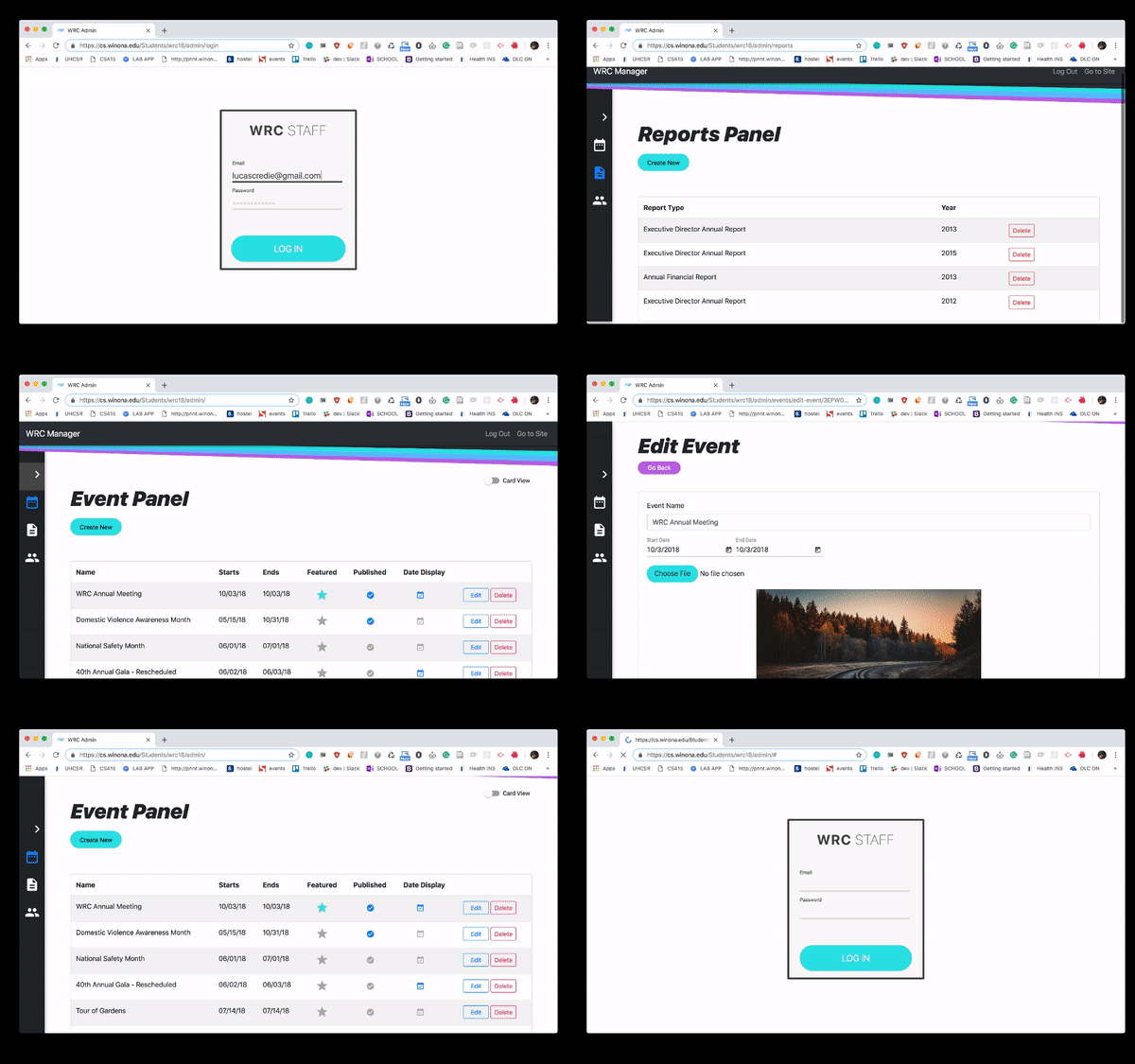
Manage events and attendees easily.Create a web application to manage events. Include features for users to RSVP, add new events, and track attendance. Implement user authentication and create admin views to manage events.
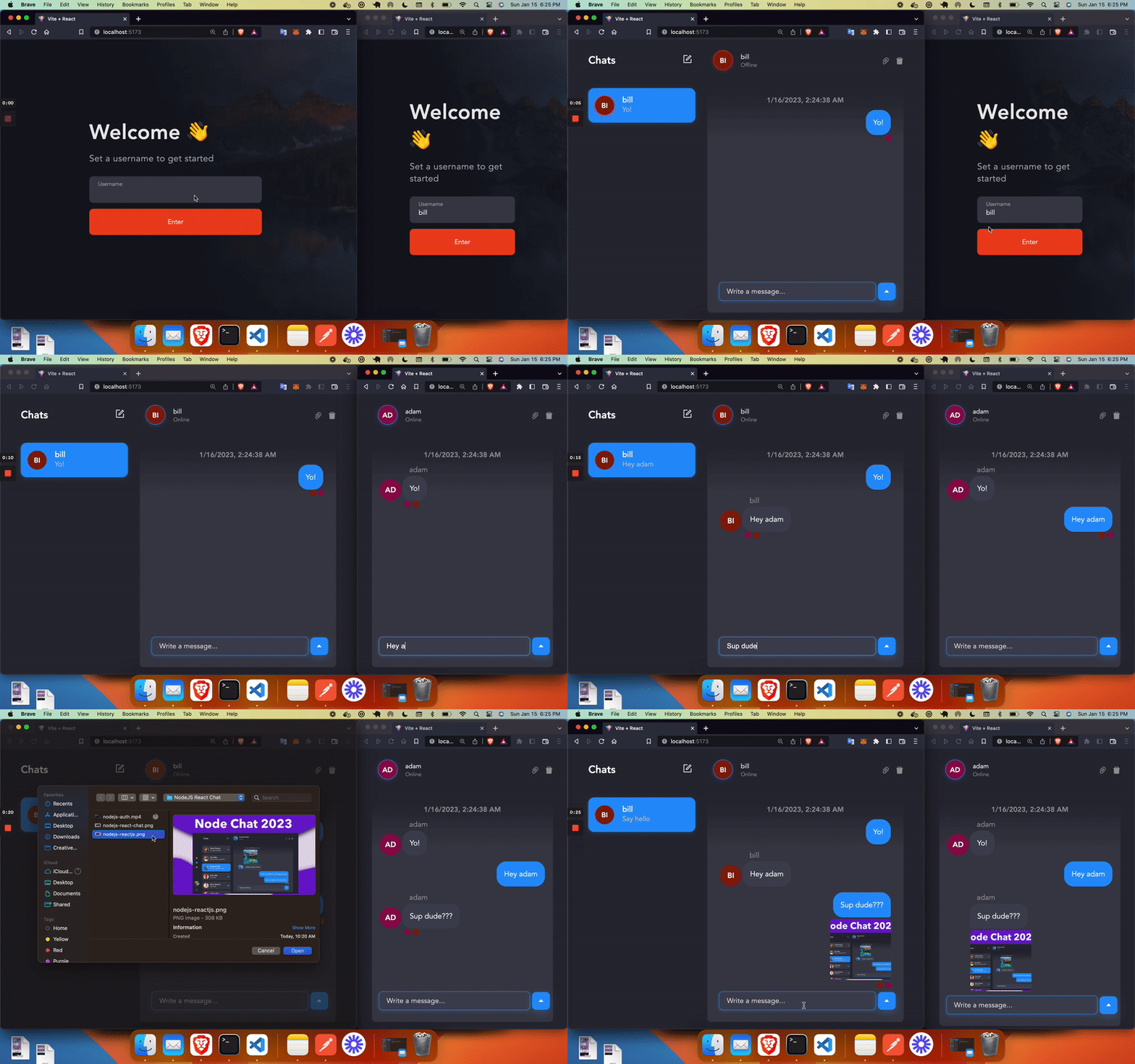
Real-Time Chat Application
Implement real-time chat with Django and WebSocket.Build a web-based chat application where users can send and receive messages in real-time using Django Channels and WebSockets. Implement authentication and create private and group chat rooms.